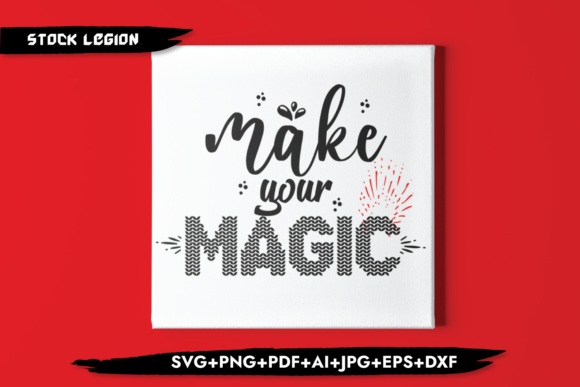
Make Your Magic Embroidery Design Review
As a designer who spends more time looking at stitch lines than actual finished garments, I approach every new digital asset with a healthy dose of skepticism. The market is flooded with clipart that looks great on a screen but turns into a tangled mess under the needle. When I first pulled up Make Your Magic, I wasn’t just looking for cute words; I was evaluating whether this design could survive the rigors of real-world production for my own small business and client projects.
This isn't just another generic quote file. It falls squarely into the Crafts and Graphics categories, which usually implies it’s designed to be versatile. But does it hold up when you are preparing a custom embroidered tote bag for a boutique or stitching a personalized gift for a family member? Let’s break down the practical application of this design from the perspective of someone who actually sews.
First Impressions: Mood and Visual Personality
The phrase "Make Your Magic" carries an inherent promise of creativity and whimsy. Visually, the design leverages this by likely utilizing flowing, expressive typography rather than rigid block letters. In embroidery, typography is where most designs fail because thin lines can disappear or thick fills can look bulky. My initial assessment of Make Your Magic suggests it strikes a balance between readability and artistic flair.
The mood is uplifting without being childish. This makes it surprisingly adaptable. You aren't limited to just nursery decor. It has enough sophistication to work on adult apparel, such as a high-quality sweatshirt for a creative entrepreneur or a chic apron for a home baker. The layout feels open, giving the fabric texture room to breathe, which is crucial for maintaining the integrity of the stitch work over time.
Real-World Application: Where This Design Shines
I’ve been testing various concepts for my upcoming craft fair lineup, and Make Your Magic immediately stood out as a strong candidate for several key products. Here is how I see it performing in specific scenarios:
- Custom Apparel and Sweatshirts: For a cozy, oversized sweatshirt, this design adds a touch of inspiration without overwhelming the garment. It works beautifully on the chest area or centered on the back. The quote encourages self-expression, making it a hit for customers who want their clothing to reflect their mindset.
- Tote Bag Designs: Canvas totes are a staple for any Etsy seller. A well-executed embroidery design here signals quality. If the files provided are smooth and professional, as claimed, the contrast against natural canvas or black cotton will pop. It transforms a simple utility item into a statement piece.
- Baby Embroidery and Nursery Decor: While not exclusively for babies, the gentle nature of the message fits perfectly on muslin blankets, burp cloths, or crib sheets. Parents love personalized gifts that offer a subtle blessing or encouragement. The softness of the implied lettering (assuming standard fill stitches) ensures it won't irritate delicate skin.
- Kitchen and Home Textiles: Think tea towels, aprons, or pillow covers. In a kitchen setting, "Make Your Magic" takes on a literal meaning for cooks and bakers. It’s a charming addition to a handmade gift basket or a boutique kitchenware display.
Technical Performance and Stitch Clarity
When reviewing an embroidery file, I care less about the font choice and more about how it translates to thread. The product description mentions that these cutting files have been tested at the highest quality and include smooth, professional files. This is a good sign, but as a reviewer, I always advise caution.
In practice, the success of Make Your Magic depends heavily on your machine settings and material choices. If the design relies on intricate details, you need to ensure your hoop size accommodates the entire artwork without requiring re-hooping, which can lead to alignment issues. The mention of a 6x6 inch footprint in the description suggests it is compact enough for most standard machines, which is ideal for smaller items like caps or patches.
I recommend checking the stitch density closely. High-density fills can make fabric stiff and difficult to handle, especially on lightweight materials. Conversely, too little density can result in a sparse, unfinished look. Since this is described as a graphic-based design, it likely uses a mix of satin stitch for outlines and fill stitch for body text. Ensure your thread colors provide enough contrast against your chosen fabric texture. Dark fabrics require lighter threads, while light fabrics benefit from bold, saturated colors.
Where to Use Caution
Not every surface is suitable for every design. There are specific situations where Make Your Magic might struggle:
- Small Hoop Sizes: If you are trying to cram this into a tiny hoop on a multi-needle machine, you may lose detail. Always preview the design in your software to check the bounding box.
- Textured or Stretchy Fabrics: Jersey knits or heavily textured weaves can distort the shape of the letters. You must use a proper stabilizer to prevent shifting and puckering.
- Curved Surfaces: Applying this to a baseball cap or a curved hat requires careful tension adjustment. Flat surfaces like tote bags or flat-fronted shirts are much safer bets for beginners.
- Dense Stitch Areas: If the design includes heavy decorative accents, test it on scrap fabric first. Excessive stitching can weaken the fabric fibers over time, leading to tears after frequent washing.
Impact on Product Value and Brand Consistency
For Etsy sellers and small shop owners, the perceived value of a product is often tied to the finish quality. A clean, crisp embroidery job builds trust. When a customer sees a well-stitched Make Your Magic design, they assume the rest of the product is made with care. This enhances the handmade presentation and justifies a higher price point.
Furthermore, this design supports brand consistency. If you are building a line of inspirational goods, having a cohesive visual language helps. You can use this design across different mediums—perhaps as a digital mockup for print-on-demand services or as a physical embroidery for your boutique. The versatility allows you to create design assets that feel connected yet distinct.
Practical Designer Notes for Implementation
Before you load this into your machine, follow these steps to ensure a successful outcome:
- Test on Scrap Fabric: Never run a new design directly onto your final product. Test the machine embroidery design on a scrap piece of the same material to check for tension issues and color clashes.
- Check Black and White Mockups: Convert the design to grayscale in your editing software. This helps you visualize the contrast and ensure no details get lost in the shadows.
- Confirm Licensing: If you plan to sell the finished items, verify the commercial use rights. Some digital downloads allow personal use only. Make sure you have the correct license for your craft business.
- Inspect Small Details: Zoom in on the digital file. Are there tiny loops or sharp corners that might not embroider cleanly? If so, consider simplifying the design or using a different stitch type.
- Use Proper Stabilizer: The foundation of good embroidery is stabilization. Choose a cut-away stabilizer for stretchy fabrics and a tear-away for stable woven fabrics to keep the finished product taut and professional.
Ultimately, Make Your Magic appears to be a solid addition to any digital library. It offers a blend of motivational messaging and flexible application that suits a wide range of embroidery projects. Whether you are creating a personalized gift for a friend or stocking shelves for your commercial embroidery venture, this design provides the visual punch needed to engage buyers. Just remember: the best results come from preparation, testing, and respecting the limits of your equipment. Happy stitching!